Scentone Aroma Kit: Bridging the Gap Between Perception and Language

Scentone Aroma Kit: Bridging the Gap Between Perception and Language
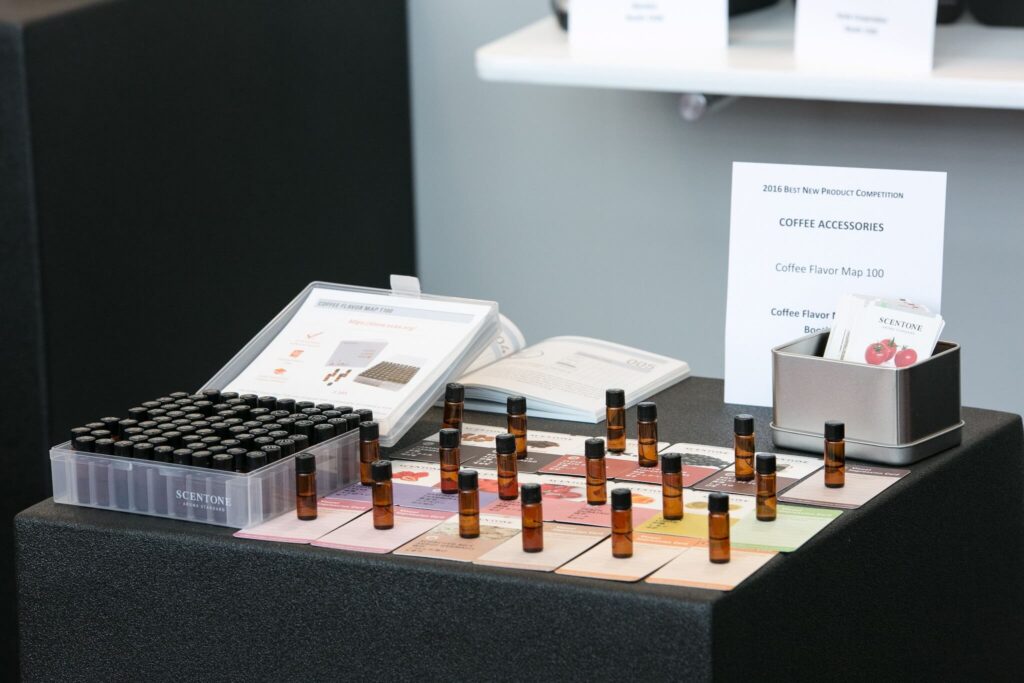
The Scentone Aroma Kit, developed by the Scentone International Aroma Research Institute, is a professional-grade sensory system designed to train, calibrate, and standardize how we perceive aromas in coffee.

While tools like the SCA Flavor Wheel provide a structured vocabulary, Scentone addresses a more fundamental layer of sensory analysis: building a reliable olfactory memory.

Similar to the legendary Le Nez du Cafe, Scentone has become an essential “tool of the trade. Scentone provides two primary tiers for sensory development:

T100 (Coffee Flavor Map): Featuring 100 representative aromas, this kit covers the essential spectrum of coffee profiles.

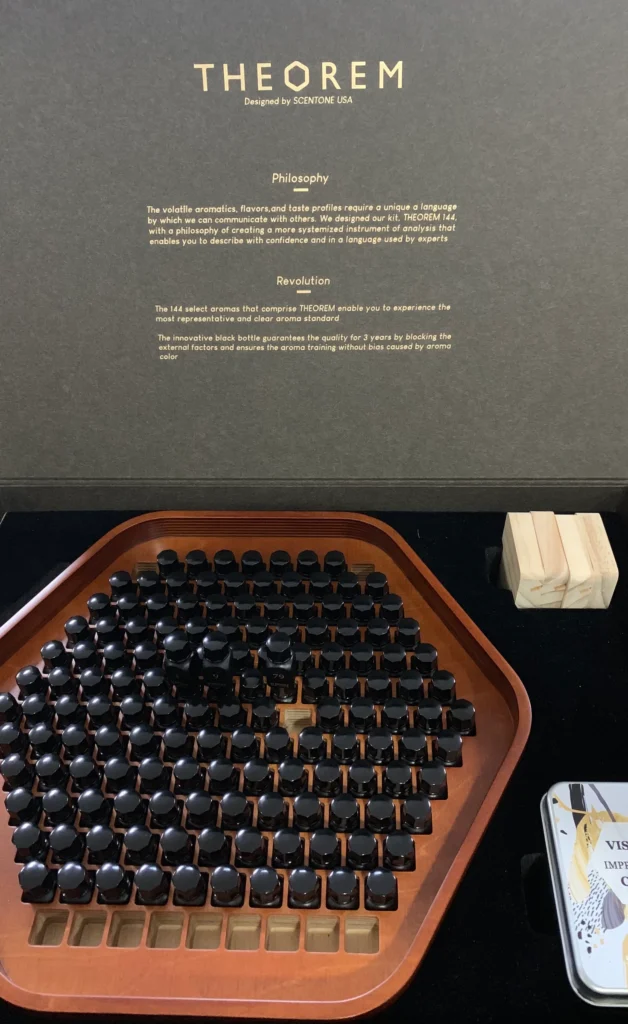
T144 (Master Theorem 144): An expanded collection of 144 aromas, offering deeper nuance and more granular detail for advanced practitioners.

Each aroma is meticulously formulated to represent key sensory notes encountered throughout the coffee value chain—from green bean characteristics and processing methods to roasting profiles and the final extraction.

Scentone Flavor Map T100

Strategic Benefits of Aroma Kit Training
In the world of specialty coffee, the primary hurdle is often not the ability to taste, but the ability to articulate those sensations. Scentone transforms abstract impressions into concrete, recognizable references.

Global Standardization: It overcomes geographical and seasonal barriers. While fresh ingredients like Blackcurrant, Cherry, or Cranberry are difficult to source in tropical regions like Vietnam, Scentone provides a consistent reference that aligns your palate with international standards.

Training Intensity & Consistency: Unlike fresh produce, which varies in quality based on ripeness and origin, Scentone vials offer a “fixed” standard. This allows for high-intensity, repetitive practice that is impossible to achieve with perishable ingredients.

Independent Mastery: Sensory training can be challenging to do alone. Scentone empowers self-paced learning through its intuitive systematic guidance and visual aids, allowing you to build sensory reflexes without needing constant group calibration.

T144 (Master Theorem 144)

Synergizing Scentone with the Flavor Wheel
Integrating Scentone with the Flavor Wheel is the most effective method to align sensory perception with industry-standard language.


Method 1: Deductive Analysis (Wheel → Kit)

Identify the primary category (e.g., Fruity).

Narrow the focus to a sub-group (e.g., Citrus).

Use Scentone to validate your finding by comparing the coffee to specific references like Lemon or Grapefruit.


Method 2: Inductive Training (Kit → Wheel)

Select a random vial (e.g., Almond).

Locate its position on the Flavor Wheel (Nutty/Cocoa → Nutty).
This exercise maps physical stimuli directly onto the structured terminology used by professionals worldwide.

To maximize the effectiveness of your training and preserve the integrity of the kit, follow these professional protocols:

Olfactory Hygiene: Ensure your hands are clean and free of perfume or food scents. Always keep your hands dry before handling the vials.

Maintenance: Always keep vials upright to prevent leakage. Never mix caps between different scents, and seal each vial immediately after use to prevent cross-contamination or evaporation.

Daily Discipline: Sensory skill is a “muscle.” Spend at least 30 minutes a day practicing. Associate each scent with a visual memory, a color, or a temperature to strengthen your neural pathways and improve recall speed.

Understanding the Flavor Profile
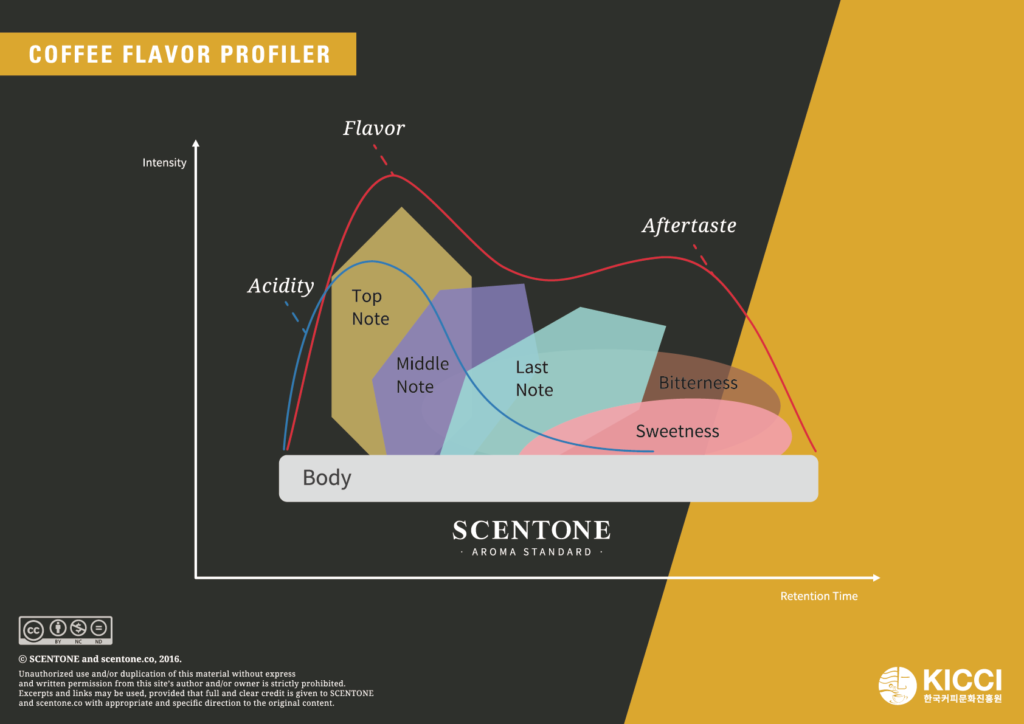
A key strength of the Scentone system is its alignment with the Coffee Flavor Profiler—a timeline of how we perceive coffee over time. By training with the kit, practitioners learn to identify the three critical phases of a coffee’s aromatic journey:

Top Notes: High-volatility aromas like florals and citrus that define the first impression.

Middle Notes: Balanced, medium-volatility scents such as nuts, caramel, and chocolate.

Last Notes: Low-volatility, persistent aromas like spices and wood that dominate the aftertaste.

Coffee Flavor Profiler

Scentone does not simply tell you what coffee tastes like; it provides the tools to recognize, recall, and communicate your sensory experiences with precision. It is a vital companion for Roasters, Baristas, QC Specialists, and Coffee Flavorists who seek to find a common sensory language with the global market. It ensures that when we speak about coffee, we are all using the same sensory “alphabet.”

This article is a simplified interpretation based on Scentone materials and industry references, adapted for clarity and practical use.

FDH

Notes Café began with a simple and deeply personal curiosity. Rather than merely reviewing cafés or describing flavors in a subjective way, we chose to explore coffee through a wider lens — looking at the culture, the people, and the everyday stories that exist around the coffee bean.

Through carefully selected articles, Notes Café hopes to help readers see coffee from a deeper perspective — not only as a drink to enjoy, but as a reflection of culture, place, and the rhythm of everyday life behind every cup.

The content at Notes Café is shaped by real-life experiences and the ongoing exploration of people who share a passion for coffee.

Notes Café offers a slower, deeper perspective on the world of coffee — where knowledge, stories, and cultural experiences come together around every cup.

Copyright © 2026