Coffee is not just a drink — it’s the rhythm of the city itself. From slow drips to modern blends, every cup tells a story
-HENRY BUI-
13/04/2026
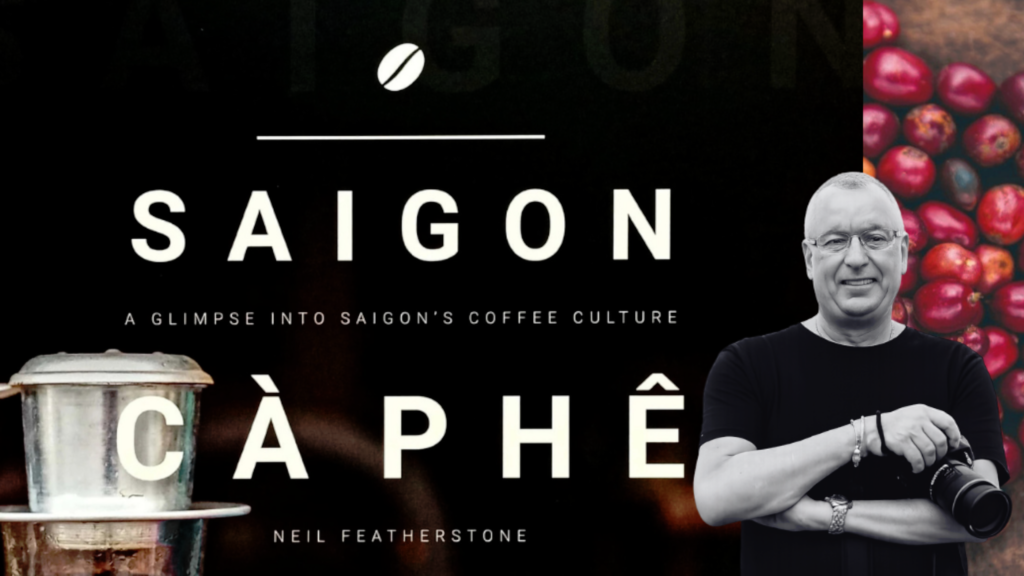
If you’ve ever wandered through Saigon’s narrow alleys, paused at a small street-side café, and sat on a low plastic stool with a glass of iced coffee in hand, you’ll understand why Saigon Cà Phê by Neil Featherstone resonates so deeply. It isn’t just a photobook—it feels more like a quiet love letter to the city’s rhythm: fast on the surface, yet full of still, unnoticed moments beneath.
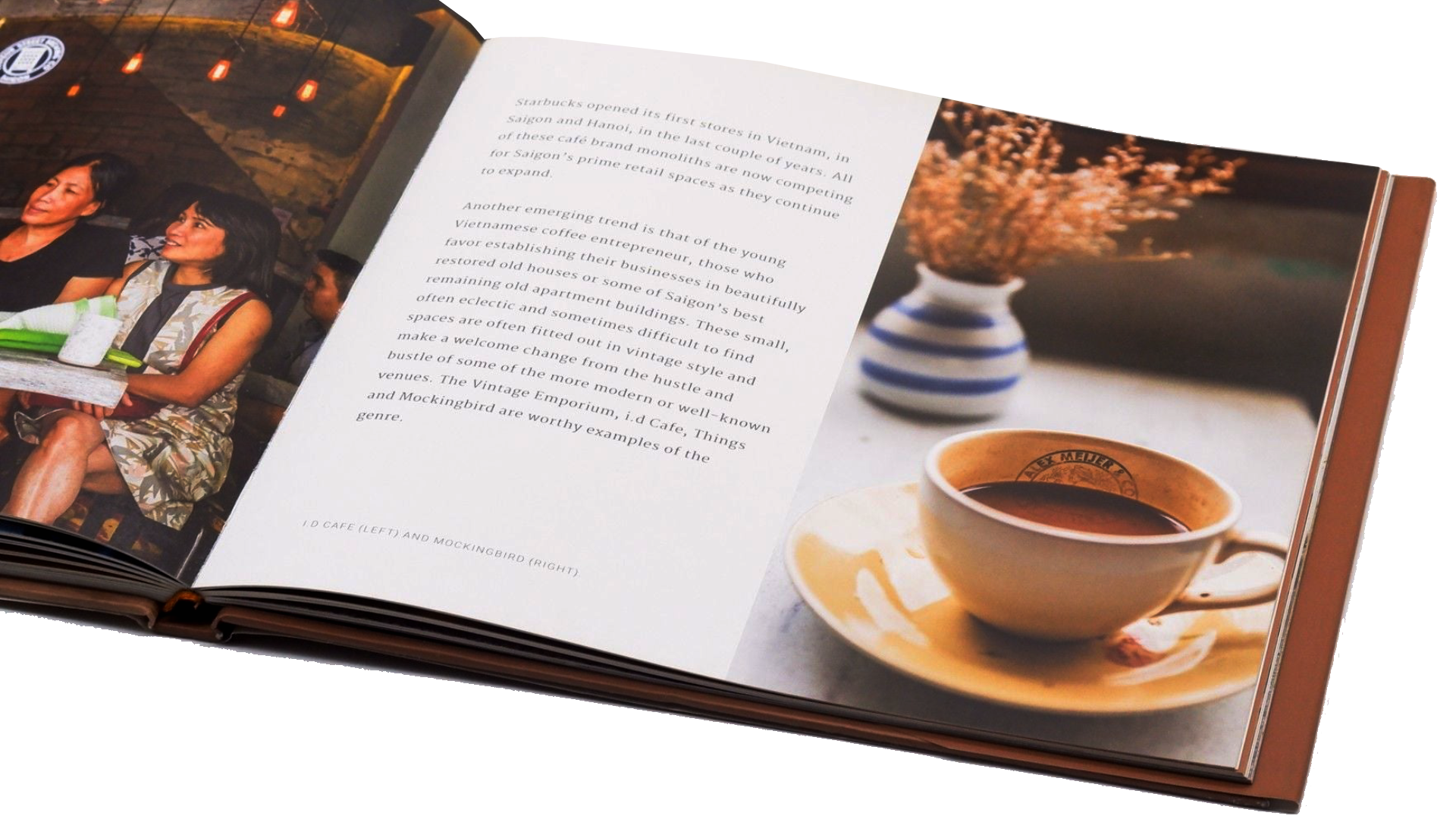
What sets the book apart is its point of view. Instead of polished, modern cafés, Neil turns his lens toward the everyday—sidewalks, alleyways, and the spaces where life unfolds naturally. You see elderly men with morning newspapers, friends mid-conversation, and small details that often go unnoticed: a worn metal phin, slow drops of coffee, a thin trail of smoke in the light. There’s no staging, no attempt to elevate the scene—only a clear, honest observation of Saigon as it is.
Saigon Cà Phê
The rapid development of Saigon’s coffee culture can be seen as a metaphor for the breathtaking changes that are taking place in this amazing city and in Vietnam as a whole.
From the coffee farms of Central Vietnam to the bustling streets of Saigon, Vietnam’s largest city and its economic powerhouse, Saigon Ca Phe looks at the changing mores and traditions around the consumption of the drink that fuels a megacity, the humble cup of coffee.
Chapter 1: The Backstory
The book begins by stepping away from the city, taking the reader to coffee-growing regions such as Đắk Lắk, where everything begins. This is more than an introduction; it establishes the foundation of the entire narrative. Coffee, as the book suggests, does not start in cafés, but in the land and with the people who cultivate it. Through quiet, respectful imagery of farmers and their work, the familiar cup of coffee gains a new dimension—no longer just a product, but the result of a long and layered journey.
Chapter 2: Styles and Tastes
From there, the focus shifts to how coffee is lived and experienced in Vietnam. Beyond the familiar choices like iced black or iced milk coffee, the book explores distinctive variations—from the richness of egg coffee to the nostalgic presence of cloth-filter brewing, and even the rarity of civet coffee. Yet the emphasis is not on categorizing drinks, but on understanding them as cultural expressions—each one tied to its own context, history, and way of life.
Chapter 3: Experience
As the narrative moves deeper into the urban experience, the book captures what feels most uniquely Saigon: the way coffee functions as part of everyday life. From the quiet elegance of morning bird cafés in places like Tao Đàn Park, to the openness of “cà phê bệt,” or simply the way cafés become informal extensions of living spaces, coffee emerges not as a beverage, but as an environment—one where conversations, routines, and human connections naturally unfold.
Chapter 4: Evolution
At the same time, the book acknowledges that Saigon is constantly evolving. A new wave of modern coffee culture begins to take shape, represented by spaces such as The Workshop Coffee and L’Usine. These places reflect a younger generation—one that approaches coffee not only as habit, but as a curated experience. The coexistence of tradition and modernity creates a more complex, but also more dynamic portrait of the city.
Chapter 5: The Future
In its final movement, the book turns toward the future, raising a quiet question: in a rapidly changing urban landscape, what happens to these long-standing traditions? Rather than offering a definitive answer, Neil Featherstone leaves space for reflection. There is a sense of cautious optimism—that growth does not have to come at the expense of identity, and that Vietnamese coffee culture can continue to evolve while remaining rooted in what makes it distinct.
This review is based on a synthesis of publicly available information and independent research
Through an outsider’s lens, Vietnamese coffee culture becomes both familiar and newly revealed. Coffee here is not just a drink; it’s a social ritual, a quiet framework where daily life happens. That’s where the book finds its depth—not in explaining, but in showing. Each image, paired with minimal text, gives just enough context to let you feel the atmosphere without interrupting it.
Spending time with Saigon Cà Phê, you begin to notice a different layer of the city. Not the skyline or its rapid change, but something more grounded—slower, quieter, and more enduring. In a city constantly moving forward, Neil chooses to pause, capturing what is most easily overlooked.
This is not a book to move through quickly. It’s one to return to, page by page, moment by moment. And by the end, coffee no longer feels like something you simply drink, but something you exist within—a space, a rhythm, a shared experience.
If you’re looking for an artbook to sit with alongside a glass of iced black coffee, this is one worth keeping. Not because it tells you something new, but because it helps you see what has always been there—with a little more clarity.
Let the music settle in—and fall into the pages
Notes Café began with a simple and deeply personal curiosity. Rather than merely reviewing cafés or describing flavors in a subjective way, we chose to explore coffee through a wider lens — looking at the culture, the people, and the everyday stories that exist around the coffee bean.
Through carefully selected articles, Notes Café hopes to help readers see coffee from a deeper perspective — not only as a drink to enjoy, but as a reflection of culture, place, and the rhythm of everyday life behind every cup.
The content at Notes Café is shaped by real-life experiences and the ongoing exploration of people who share a passion for coffee.
Notes Café offers a slower, deeper perspective on the world of coffee — where knowledge, stories, and cultural experiences come together around every cup.