COFFEE BOOKSHELF

coffee as a lens to understand Japan’s culture and history.

Behind each cup, there is also a strong sense of craftsmanship.

-CLARA NGUYEN-

14/04/2026

If you’ve ever sat in a quiet, distinctly Japanese café—where the only sound is water slowly dripping and the air carries a soft trace of coffee—you might already sense why Coffee Life in Japan by Merry White feels different from most books about coffee.

It doesn’t try to take you to the “best cafés,” nor does it offer quick recommendations. Instead, it gently opens a door into Japanese life—using coffee as a quiet way in.

A Cup, A Space, A Different Way to Be

In her own way, Merry White approaches coffee not simply as a drink, but as a lens into how people live, gather, and move through everyday life in Japan. And that shift in perspective changes everything.

Japan is often linked to tea, but coffee has been part of its story for centuries. Introduced in the 1500s, it later grew through global ties—connecting Japan to Brazil’s coffee farms and shaping early café culture, including Café Paulista in the 1900s. By the 1920s, cafés had become cultural spaces before gradually evolving into the quieter, more introspective places we see today.

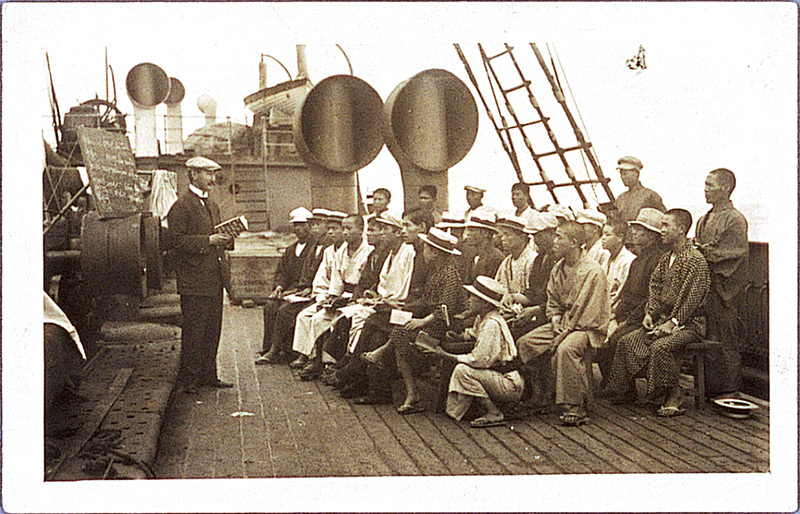
Japanese emmigrants learning Portuguese on their way to Brazil. 1908.

What defines coffee culture in Japan today isn’t just the drink—it’s the space around it. Many cafés carry a distinct personality, shaped by their owners. Some feel like stepping into a Viennese salon, with velvet interiors and classical music playing softly in the background. Others follow a minimalist or modernist aesthetic. As Merry White describes it, cafés can feel like a kind of stage set—you don’t just enter a place, you step into a version of yourself that belongs to that space.

This is where the idea of the “third place” becomes real. Cafés are not home, and not work—they exist somewhere in between. A place where you don’t have to be anything in particular. In many Japanese cafés, people sit quietly, alone but not isolated. There’s a shared understanding of space—how to be present without intruding. It’s what White describes as being “private in public,” a subtle but deeply valued way of being.

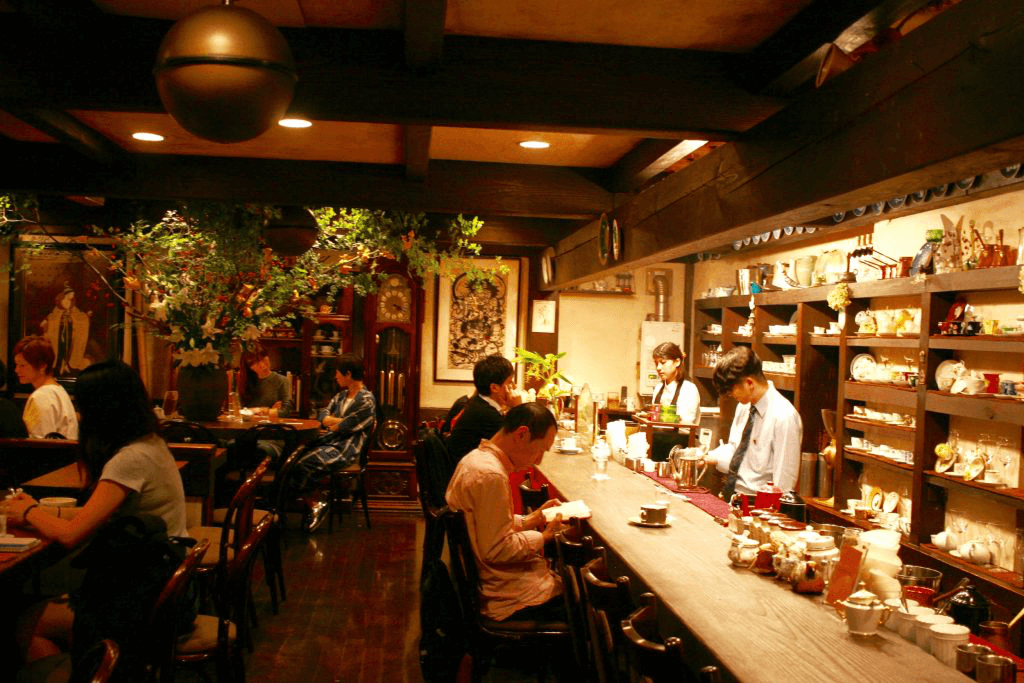
Most kissaten retain their vintage charm from the Showa era. Image via Savvy Tokyo

 Behind each cup, there is also a strong sense of craftsmanship. The café owner is often not just running the space, but fully immersed in the process—roasting beans, grinding them fresh for each cup, and brewing by hand. In some cases, even the tools are personal, like hand-woven cloth filters. Methods such as pour-over or siphon brewing are not simply techniques, but rituals. There is no rush, no need for automation. What matters is attention.

This is where the idea of kodawari comes into focus—a deep commitment to doing one thing well, with care and consistency. And in that sense, each cup of coffee becomes something personal. Not just a product, but an expression of the person making it, and a quiet connection to the person receiving it.

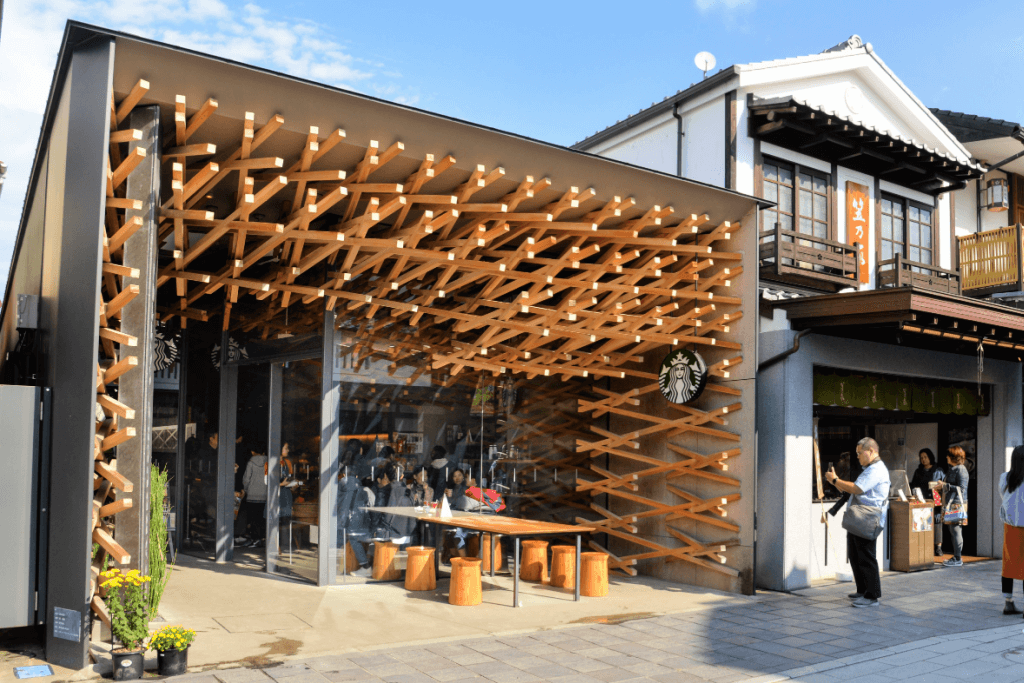
Starbucks is more famous than kissaten these days. Image via Shutterstock

The book never feels heavy. It moves slowly, leaving space for you to notice things on your own. At some point, you stop reading it as a book about coffee. It becomes something else—about rhythm, about space, about how people choose to live within small, everyday moments.

Chapter 1: Coffee in Public – Cafés in Urban Japan
An overview of how cafés exist as a natural part of everyday urban life in Japan.

Chapter 2: Japan’s Cafés – Coffee and the Counterintuitive
An exploration of the unique, sometimes unexpected aspects of Japanese coffee culture compared to the rest of the world.

Chapter 3: Modernity and the Passion Factory
How cafés become symbols of modern life while quietly nurturing individual passions.

Chapter 4: Masters of Their Universes – Performing Perfection
A closer look at café “masters” (owners) and their philosophy of pursuing perfection in every cup.

Chapter 5: Japan’s Liquid Power
An analysis of coffee’s influence as a subtle force shaping both society and the economy.

Chapter 6: Making Coffee Japanese – Taste in the Contemporary Café
How Japan has refined coffee into its own distinct identity, shaping taste, ritual, and experience.

Chapter 7: Urban Public Culture – Webs, Grids, and Third Places in Japanese Cities
A deeper dive into the social role of cafés as “third places” within the urban fabric.

Chapter 8: Knowing Your Place
A quiet conclusion on personal presence and cultural awareness within café spaces.

Appendix: Visits to Cafés – An Unreliable Guide
A more personal and intimate section, where the author shares real café visits—not as definitive recommendations, but as subjective, lived experiences that invite readers to explore on their own.
This review is based on a synthesis of publicly available information and independent research

Of course, the book may feel slower or more reflective than what some readers expect. And since it was published some time ago, certain details may have changed. But the essence it captures—the feeling of being in those spaces—remains intact.

By the end, what stays with you isn’t a list of cafés or brewing methods. It’s a shift in how you see something familiar. Coffee is no longer just something you drink. It becomes a small, intentional space within your day—a pause, a moment of awareness, a quiet return to yourself.

Let the music settle in—and fall into the pages

FDH

Notes Café began with a simple and deeply personal curiosity. Rather than merely reviewing cafés or describing flavors in a subjective way, we chose to explore coffee through a wider lens — looking at the culture, the people, and the everyday stories that exist around the coffee bean.

Through carefully selected articles, Notes Café hopes to help readers see coffee from a deeper perspective — not only as a drink to enjoy, but as a reflection of culture, place, and the rhythm of everyday life behind every cup.

The content at Notes Café is shaped by real-life experiences and the ongoing exploration of people who share a passion for coffee.

Notes Café offers a slower, deeper perspective on the world of coffee — where knowledge, stories, and cultural experiences come together around every cup.

Copyright © 2026

Leave a Reply

Your email address will not be published. Required fields are marked *